Image 1 of 1
2. Course Overview
Abstract: This intermediate course helps students transition from descriptive reading to understanding more complex, argumentative prose. You will build a firm grasp of the expanded indicative system, non-finite verb forms (participles, infinitives, supines, and gerunds), and deponent verbs. By exploring classical mythology, ancient letter-writing conventions, and cultural debates, you will connect directly with how the Romans actually thought and communicated.
Comprehensive Description: This intermediate module represents a natural evolution in your journey through the Lingua Latina per se Illustrata series. Here, the Latin language shifts from simple descriptions of daily life to the expression of deeper philosophical ideas, social debates, and complex human relationships. Students systematically navigate advanced sentence structures, focusing on the practical use of past and future tenses, deponent verb paradigms, the mechanics of the ablative absolute, and how gerunds and supines expand your expression. Rather than treating grammar like a dry technical blueprint, Level 3 brings these structures to life, culminating in an introduction to the subjunctive mood through expressions of purpose and commands. This grammar becomes a tool to explore Roman family dynamics, the realities of ancient agriculture, and timeless mythological stories. By exploring these structures through context, you will transform from a careful reader into a confident explorer of classical thought.
3. Methodology & General Description
This course utilizes Hans Ørberg's Lingua Latina per se Illustrata: Familia Romana. Each twelve-week term consists of bi-weekly sessions comprising two academic hours (90 minutes total).
As a unique pedagogical counterweight to traditional translation-heavy systems, our approach treats Latin as an active structural matrix. Students prepare for each session by reading 10–15 lines of the assigned narrative text. During class, these passages serve as the foundation for intensive, active drills designed to bypass mental translation and anchor intermediate syntax natively:
Active Class Disputation: Students formulate and answer targeted argumentative questions entirely in Latin, actively deploying the subjunctive mood to express hypotheses, doubts, and indirect commands.
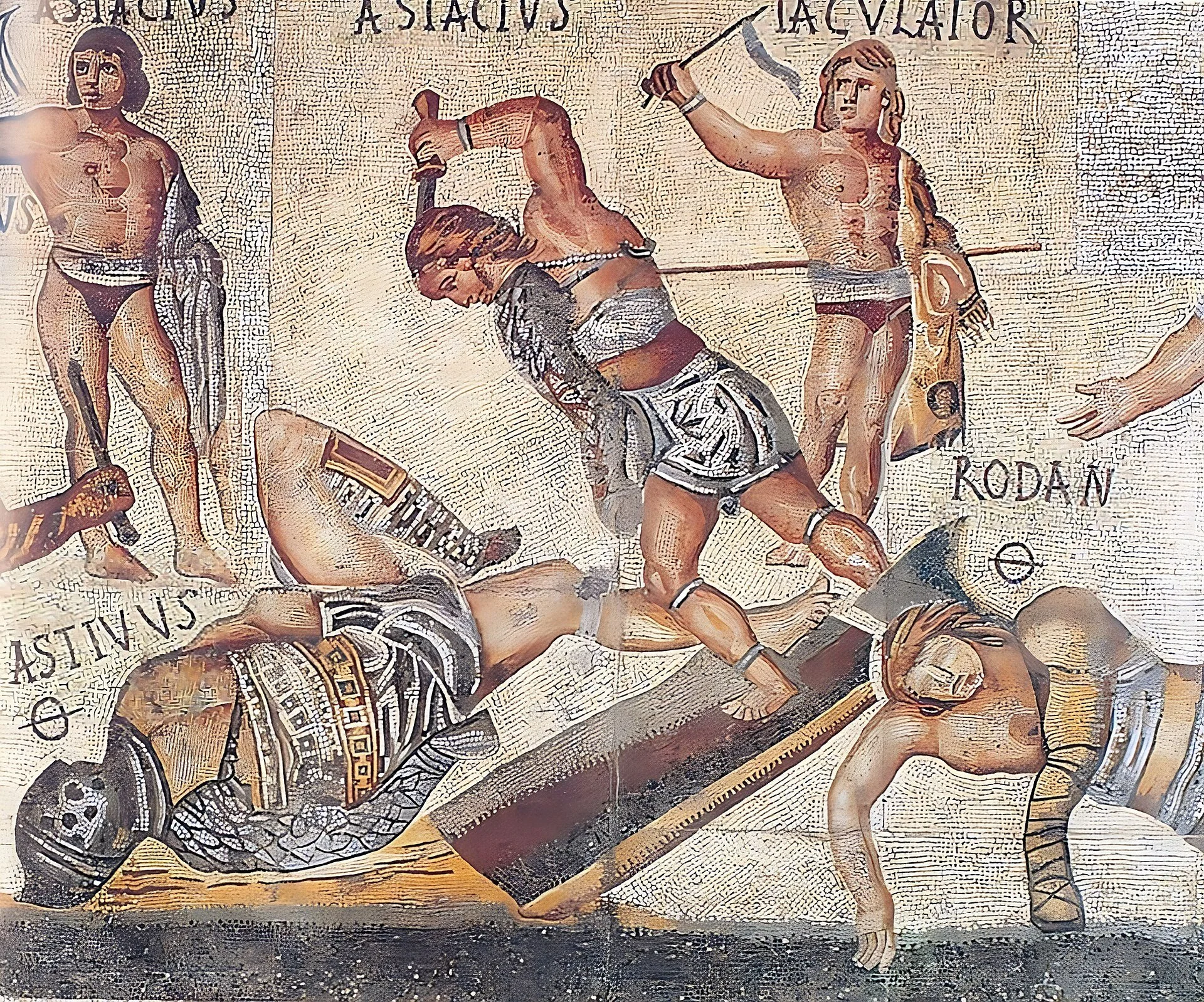
Visual Contextualization: Utilizing ancient architectural plans, archaeological schemas of Roman farms, and preserved Pompeian mosaics to connect complex syntactic clauses directly to physical and material realities.
Linguistic Paraphrase: Re-engineering highly sophisticated periods through synchronic active drills, translating indirect speech back into direct discourse entirely in the target language.
Internalization: Gradually memorizing authentic epistolary greetings, conversational idioms, and mythological epithets to build high-level reading stamina.
Through these exercises, participants acquire not only the narrative lexicon but also the metalinguistic target-language terminology necessary to discuss advanced syntactic operations in Latin itself.
4. Proficiency & Requirements
Language Level:
Framework Reference: Intermediate — Level 3 (Familia Romana, Capitula XIX–XXVII).
General Description: Intended for students who have successfully finalized Level 2 or its equivalent, possessing functional control over all nominal declensions, basic active/passive indicative tense systems, and the preliminary accūsātīvus cum infīnītīvō structures.
Estimated Self-Study Time:
Time Commitment: Approximately 3–4 hours per week (including a mandatory 20 minutes of daily retention review).
Preparation: Preliminary independent reading, vocabulary tracking, and structural parsing of 15–20 lines from the designated chapter are required prior to each session.
5. Thematic Extensions & Classical Intertextuality
As you progress into the more conversational and descriptive chapters of the course, you will encounter themes that touch upon the real socio-cultural life, legal practices, and storytelling of the Roman world. For students interested in expanding their personal research or exploring unadapted literature, these chapters provide an excellent thematic foundation to look at the following primary sources:
The Roman Household & Social Themes:
Aulus Gellius (Noctes Atticae, Book XII.1), Tacitus (Dialogus de Oratoribus, 28) & Juvenal (Satura VI): The domestic debates between characters in the chapter Parentēs regarding family life, child-rearing, and the role of nurses offer a wonderful opportunity to explore authentic Roman social history. To expand on these cultural questions, you can read Aulus Gellius’s accounts of the philosopher Favorinus of Arles, or look into the social critiques of Tacitus and Juvenal to see how the Roman elite viewed household dynamics.Mythology & Storytelling:
Ovid (Metamorphoses, Book VIII): The adventures introduced in the chapters Thēseus et Minōtaurus and Daedalus et Icarus bring classic Greek myths to life. Reading the original stories in Ovid’s Metamorphoses allows you to discover these same legends in their native poetic setting, using the shared themes and core vocabulary you practiced in class to guide your reading.Agriculture & Rural Economy:
Cato the Elder, Varro, & Columella (De Re Rustica): The vocabulary of countryside life found in Rēs Rūsticae—including terms for the plow (aratrum) and sowing (semen)—provides a natural stepping stone to the great agricultural treatises of ancient Rome. Students interested in the agrarian roots of Roman wealth and daily life can use this chapter's themes to begin exploring the realistic manuals of Cato, Varro, or Columella.Ancient Medicine & Home Care:
Celsus (De Medicina): The descriptions of illness, checking the pulse (venas tangere), and caregiving in Puer Aegrōtus touch upon the realities of health in the ancient household. Celsus’s De Medicina serves as a fascinating parallel text to deepen this specific terminology and to learn more about the everyday practice of ancient doctors.Marriage & Family Law:
Catullus (Carmina 61 & 62) & Early Legal Texts: The discussions around Roman marriage, dowries (dos), and family contracts in Marītus et uxor introduce concepts that you can explore further through early legal history. For a more artistic view of these same traditions, the beautiful wedding hymns (epithalamia) of Catullus offer a wonderful literary expansion.The Art of Letter Writing:
Cicero (Epistulae ad Familiares) & Pliny the Younger: The chapter Epistula Magistrī introduces the basic layout and style of ancient correspondence. To explore how the Romans actually communicated, the authentic letters of Cicero and Pliny offer the perfect next step. They allow you to practice formal greeting formulas (like S.P.D.) and see how historical figures structured their messages.Urban Culture & Archaeological Parallels:
Petronius (Satyricon, 29) & Pompeian Epigraphy: The memorable scene in Cave canem involving a nervous visitor and a warning mosaic mirrors the real everyday life of ancient Italian cities. Reading the famous passages of Petronius's Satyricon or looking at the actual Cave canem mosaics preserved in the ruins of Pompeii provides a fantastic way to bring this vocabulary into a real-world archaeological context.
6. Materials & Bibliography
Required Textbooks:
Hans H. Ørberg, Lingua Latina per se Illustrata, Pars I: Familia Romana (Hackett Publishing).
Hans H. Ørberg, Exercitia Latina I (Hackett Publishing).
Recommended Auxiliary Materials:
Hans H. Ørberg, Colloquia Personarum & Latine Disco.
Roberto Carfagni, Nova Exercitia Latina, Vol. 1.
W. Sidney Allen, Vox Latina: A Guide to the Pronunciation of Classical Latin.
7. Grammatical Syllabus
Morphology: Full systematic paradigms of the Subjunctive Mood (Present, Imperfect, Perfect, and Pluperfect tenses, active and passive voices); introduction and mastery of Deponent Verbs across all conjugations; morphology of participles (Present, Perfect, Future); integration of the Supine forms (datum, factu); advanced comparison of adjectives and adverbs.
Syntax: Comprehensive deployment of the Subjunctive in subordinate clauses: Purpose clauses (ut/ne), Result clauses (ut/ut non), Indirect Commands, Indirect Questions, and Cum-historical/causal clauses. Advanced operations of indirect statement (oratio obliqua); syntax of verbs of fearing and expressions of prohibition; introductory mechanics of conditional sentences and the Ablative Absolute framework.
Orthoepy & Pragmatics: Structural composition of ancient epistolary tenses; phonetic values of rhythmic prose; text-placement conventions for formal epistolary and narrative delivery.
8. Chapter Coverage & Readings
This module covers approximately 1,350 verses of highly complex discursive and narrative prose text (~54 verses per instruction unit):
XIX. Marītus et uxor: Syntactic structures of marriage law, dowry vocabulary, and introductory relative purpose clauses.
XX. Parentēs: Advanced indirect statement configurations and Subjunctive clauses within the context of moral philosophical debates.
XXI. Pugna discipulōrum: Active usage of deponent verbs and narrative descriptions of physical and verbal conflict.
XXII. Cave canem: The mechanics of the Supine and the syntax of verbs of fearing (verba timendi) embedded in urban environments.
XXIII. Epistula magistrī: Pragmatics of the epistolary imperfect tense, formal Roman greeting formulas, and advanced indirect commands.
XXIV. Puer aegrōtus: Clinical and diagnostic medical vocabulary, and the syntax of final clauses within domestic environments.
XXV. Thēseus et Minōtaurus: Extensive complex narrative parsing, focusing on structural participle systems and mythological imagery.
XXVI. Daedalus et Icarus: Advanced integration of participles and indirect questions within Ovidian prose adaptations.
XXVII. Rēs rūsticae: Technical agricultural terminology, advanced temporal clauses, and introductory conditional structures.